Champi Chacha: a 90s saloon in your browser
Customers ask for the Sanju Baba cut. You give them what Chacha thinks is right. They storm out. That is the game.
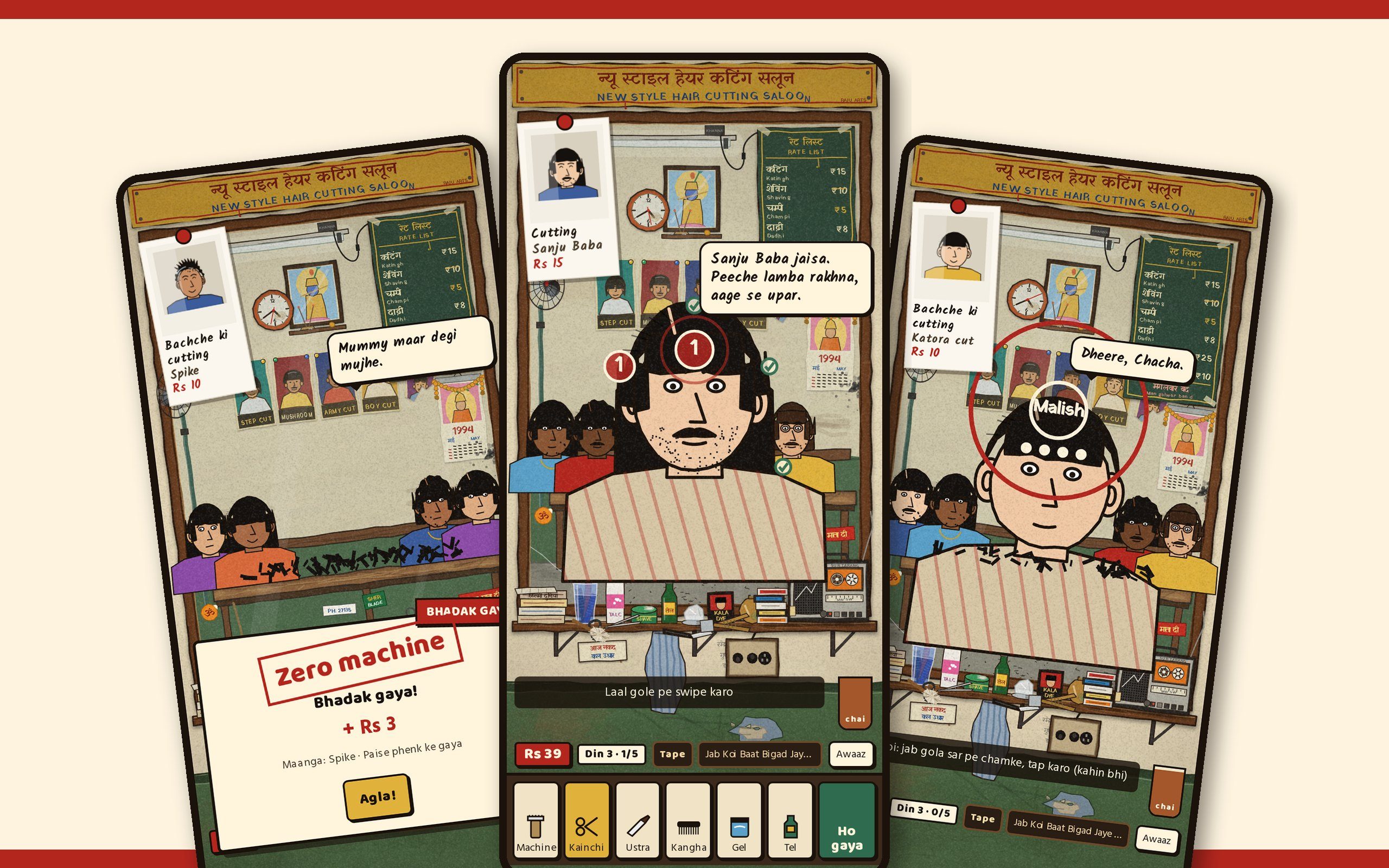
Champi Chacha is a small browser game about the saloon at the corner of every 1990s mohalla: the one chair, the wall-length mirror, the bench of people waiting with a Stardust, the rate list painted on the wall and a two-in-one playing film songs through a cracked speaker. You are Chacha. Customers sit down and ask for the look on the poster. Play it here, on a phone with the sound on. Nothing to install, no sign-up.
The joke
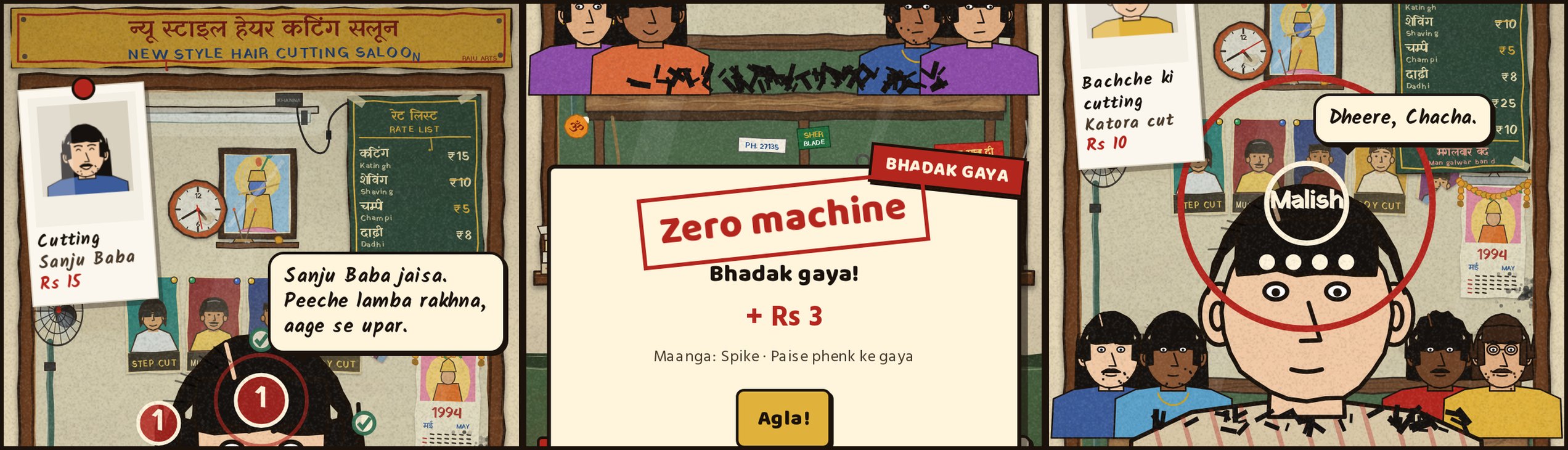
Everybody who grew up then knows it: you asked for the Sanju Baba, you got the katora. The customer pins up what he wants as a Polaroid. On the first day red circles on his head show where to swipe and how much; from the second day they are gone, and Chacha cuts by eye, one swipe at a time, with the Polaroid as the only guide. The result card names what you actually gave him. Get it right and he is khush and tips. Get it roughly right and he says chalega. Go too far and the card shakes, a ribbon says BHADAK GAYA, he throws a few rupees at you and storms out of the chair. The bench flinches, and the next boy walks up saying "Dheere se, Chacha."
A cut you were never asked for gets its own name on the card: Katora Deluxe, Murga Cut, Chooha Poonchh, Tirupati Special. The day-end card counts how many went away gussa mein and lists your Chacha Specials.
What people ask for
Only the decade's real requests, named the way customers said them: Sanju Baba, Shah Rukh wala, the Aashiqui cut, beech ki maang, the Khiladi step cut, Jhakaas, Hero No. 1, the Barsaat and Mohra looks, Rangeela Munna, the Sachin and Azhar cuts, Shaktimaan, Mowgli, katora, fauji, zero machine, mushroom cut, gel spikes and plain "normal cutting". Nothing from after 1999. Fathers bring in their boys and override the order from the bench, and the boy on the plank across the armrests takes it badly.
Champi, ustra and the two-in-one
After the cut comes the champi: tap on the beat of whatever song is playing, then hold for the neck crack and hope. Shaving is lather, a thumb and an ustra with a snapped blade, and phitkari for the nicks; from the second day Chacha can offer one to any grown customer, asked for or not. Gel makes spikes, Navratna tel darkens the hair, the kangha draws the parting. Rs 15 for a cut, Rs 5 for a champi, Tuesday closed.
The two-in-one plays the real tape: 59 film songs from 1990 to 1999, Aashiqui to Sarfarosh with Kumar Sanu on every one, as the 30-second previews Apple publishes for Apple Music, streamed straight from Apple while you cut. Tap the title to flip to the next song. Flick to Radio and the same songs come through a station in the Vividh Bharati style, with an announcer taking farmaish and reading the week's Geetmala between them. The patter is written for the game and nobody's voice is imitated.
How it is made
Plain JavaScript, no framework. The saloon is painted in code on a canvas, with brush strokes and paper grain, and every face is invented. The sound effects and the cassette clunks are synthesised in the browser with Web Audio, and the customers speak through the browser's own voices. The fonts are Yatra One for the painted boards, Baloo 2, Hind and Kalam for the chrome, all open licence and subset to the glyphs used. The first visit is under 350 KB.